One Server Becomes Twelve
The first secure MCP server feels manageable until every team repeats the same work.
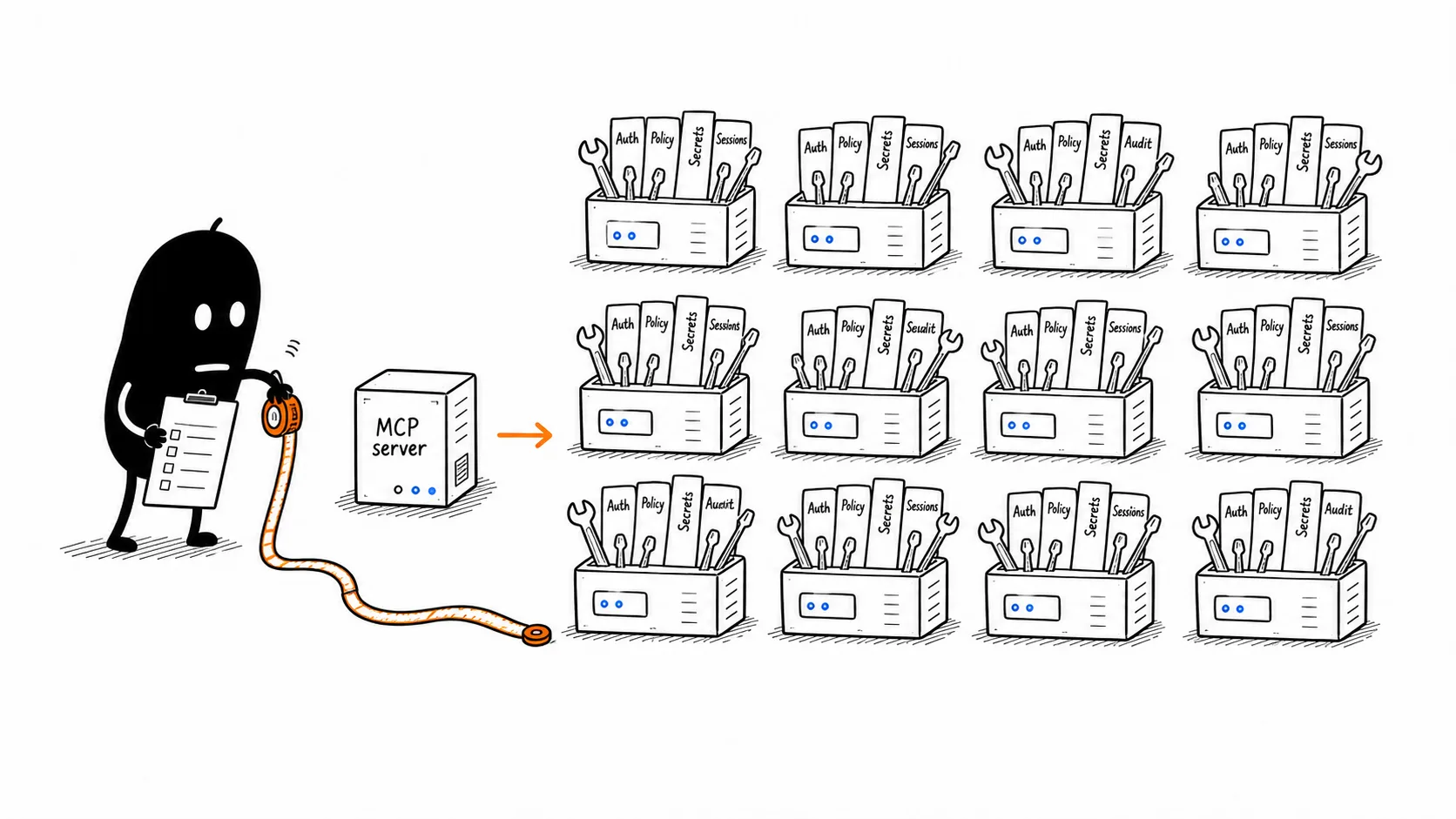
Why it mattersRepetition turns governance into drift.
Auth Copied By Hand
Each server starts interpreting identity and headers a little differently.
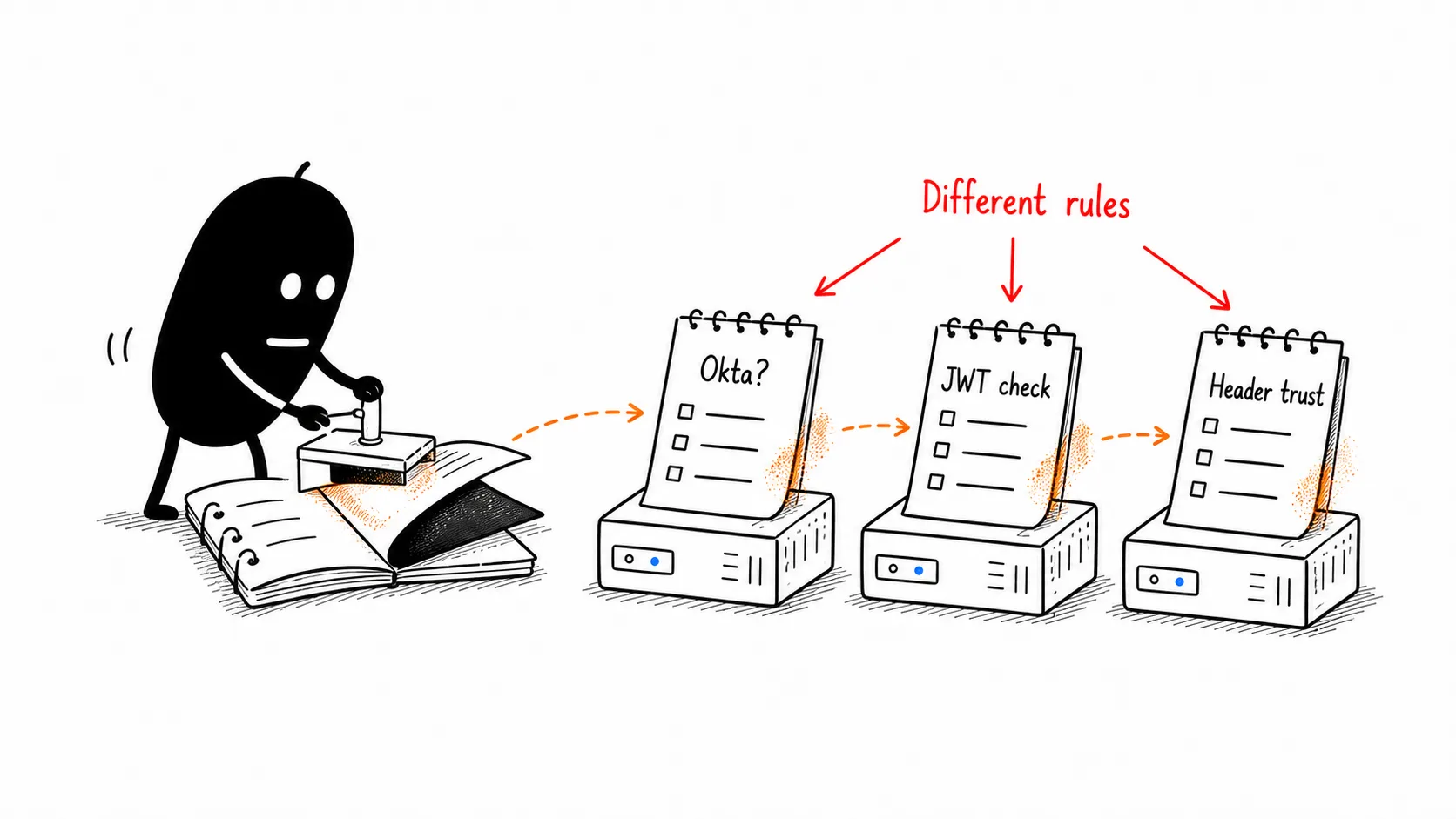
Why it mattersHand-copied auth creates inconsistent trust assumptions.
Policy Forks Quietly
Read, write, production, and exception rules branch in different places.
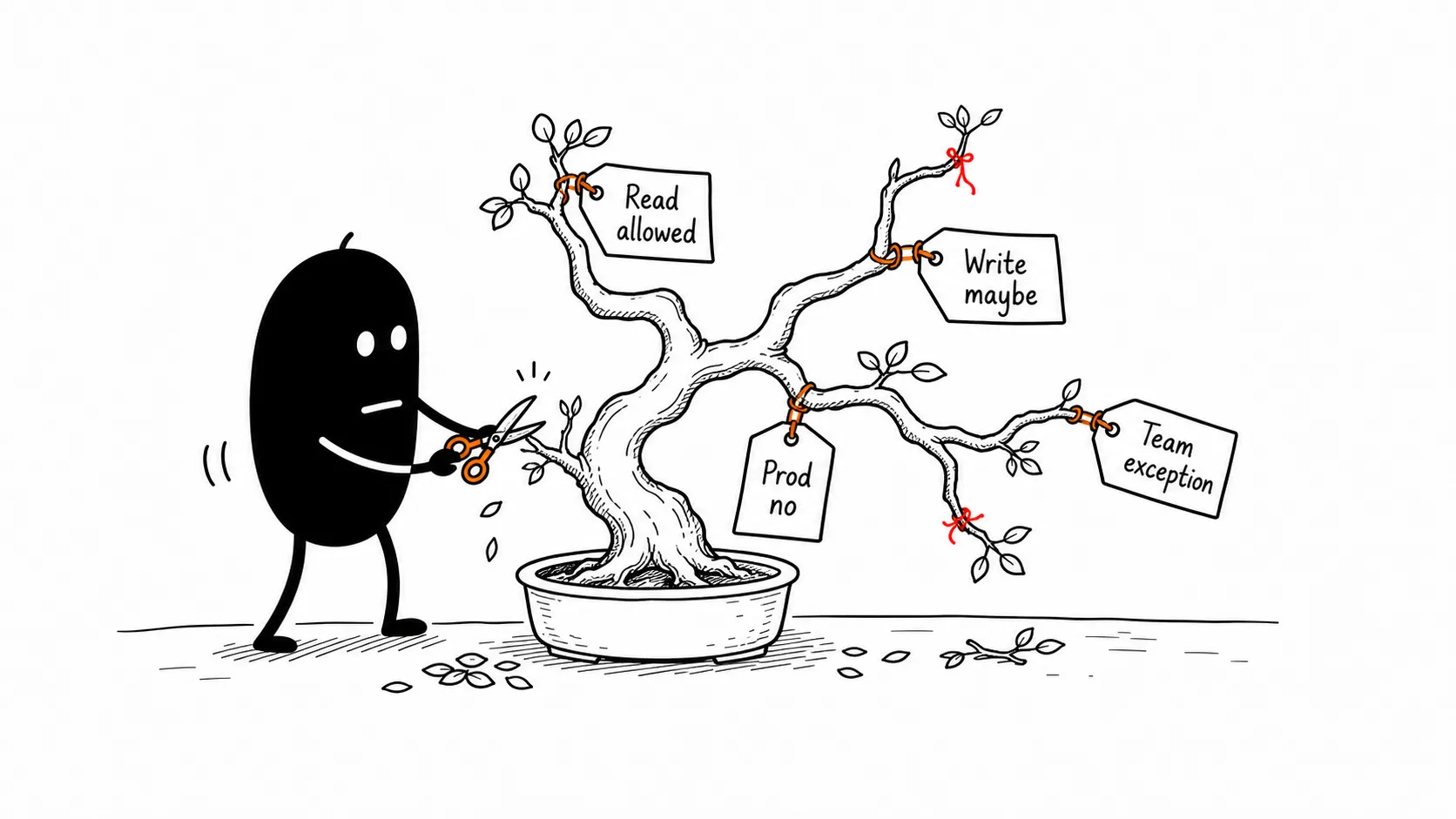
Why it mattersForked policy is hard to explain, test, and audit.
Secrets Under Desks
Service keys, delegated tokens, rotation, and ownership become per-team chores.
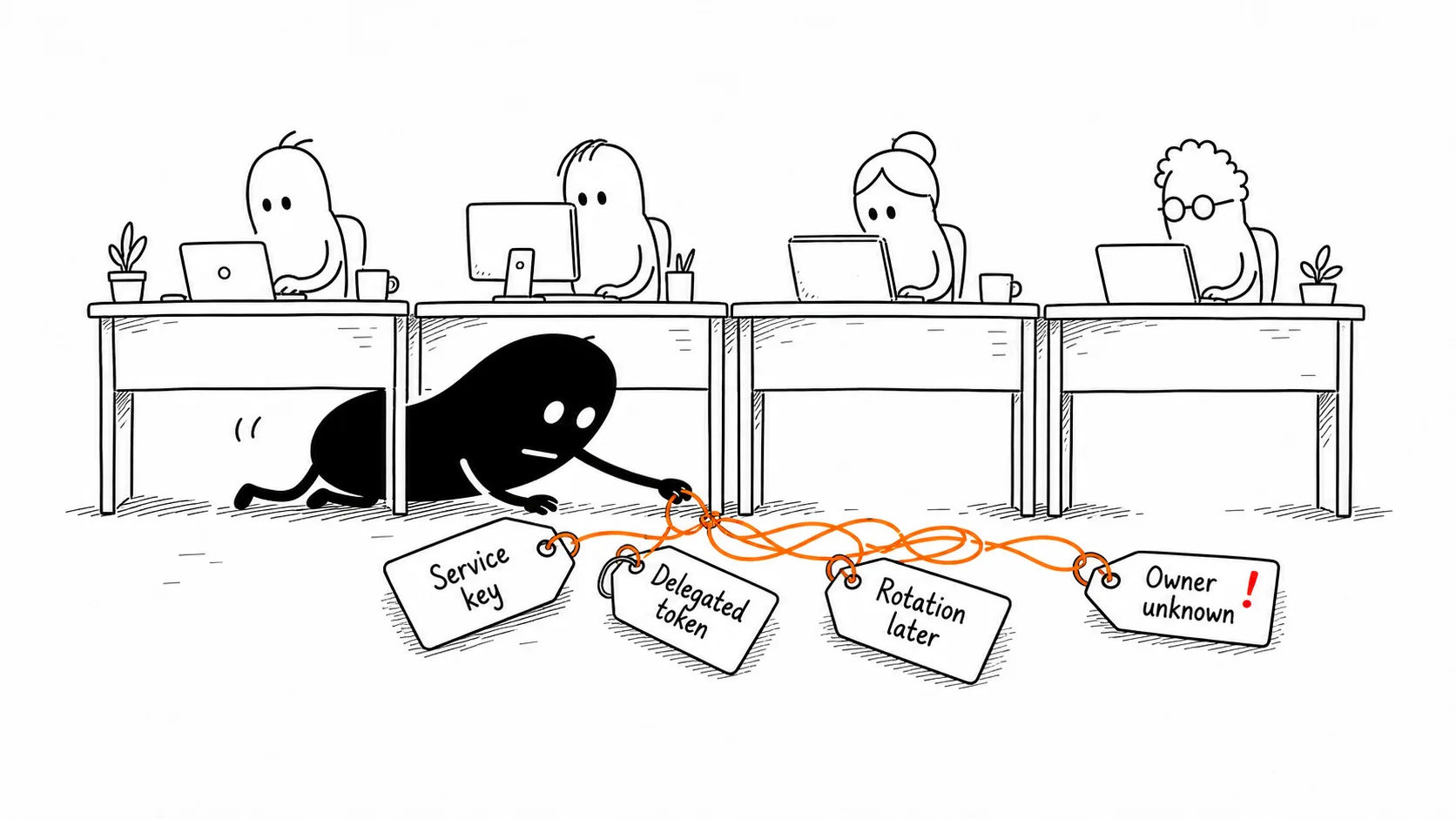
Why it mattersCredential sprawl is where small pilots become security debt.
Audit Receipt Hunting
Reviewers hunt across mismatched logs for allow, deny, tool, credential, and reason evidence.
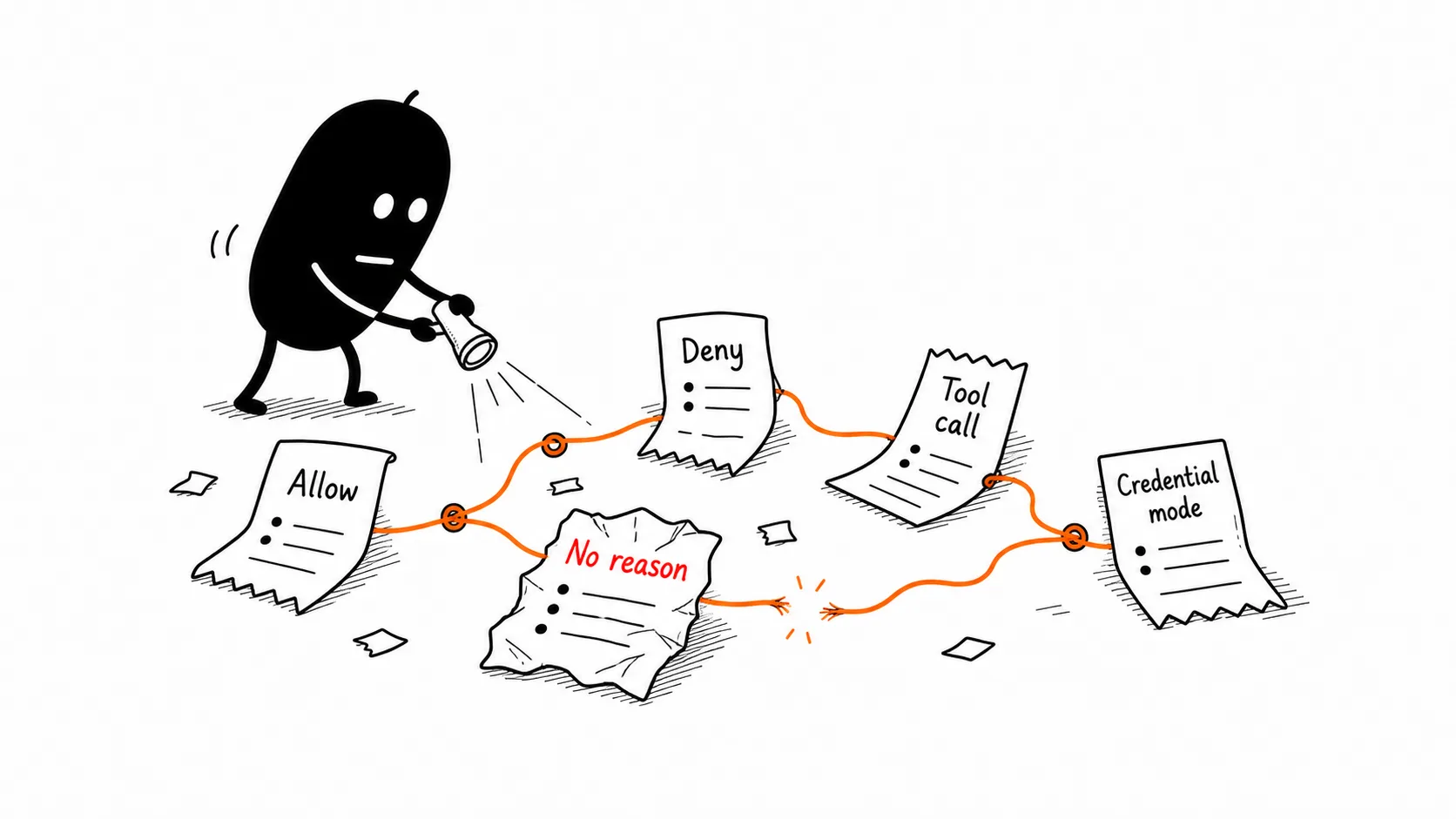
Why it mattersGovernance needs comparable receipts, not storytelling after the fact.
Sessions Keep Running
Idle, reconnect, revoke, and affinity behavior diverge across servers.
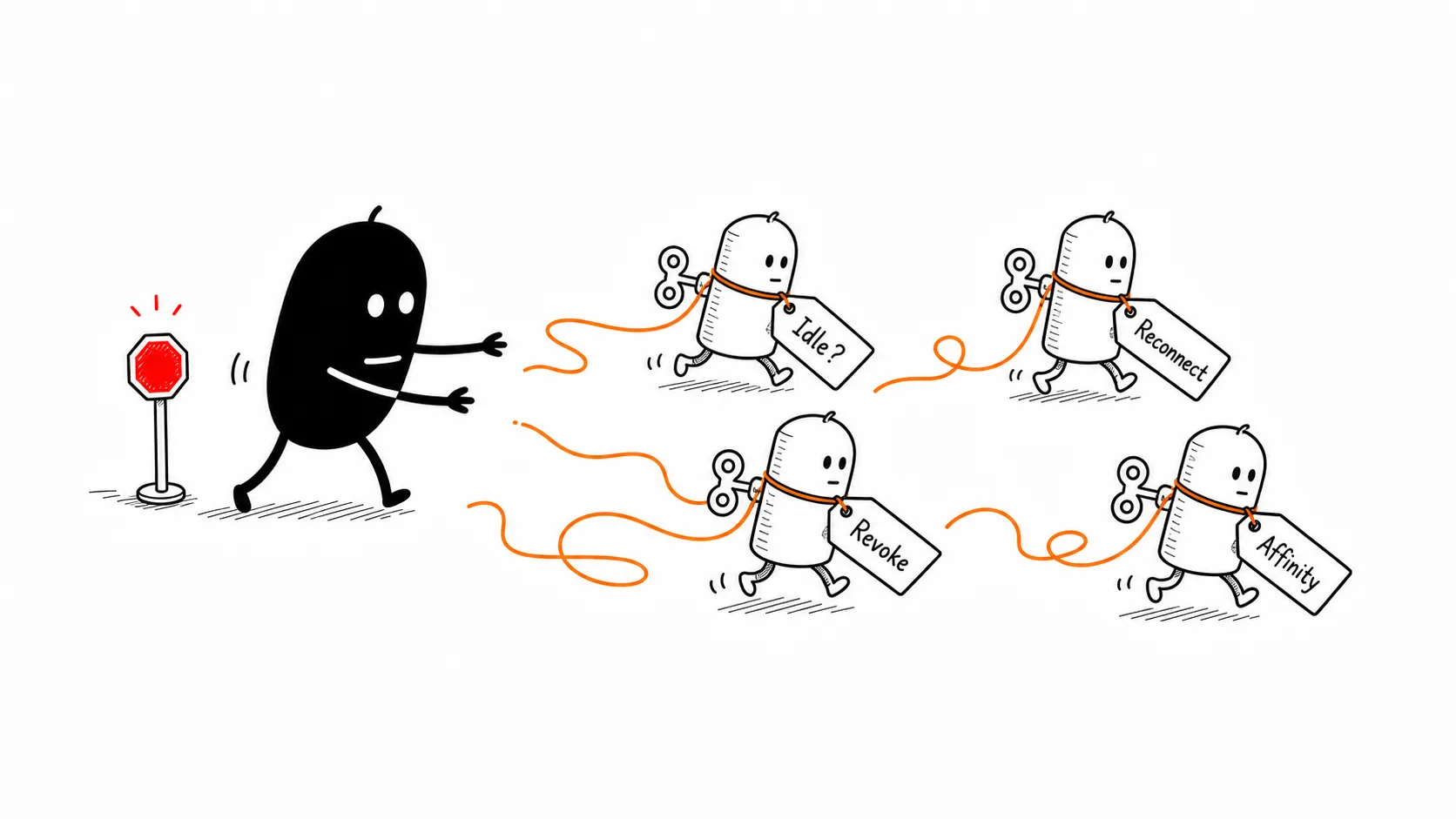
Why it mattersSession lifecycle is a shared control problem, not only an app detail.
Private Routes Multiply
VPN paths, internal APIs, MCP servers, and one-off tunnels accumulate.
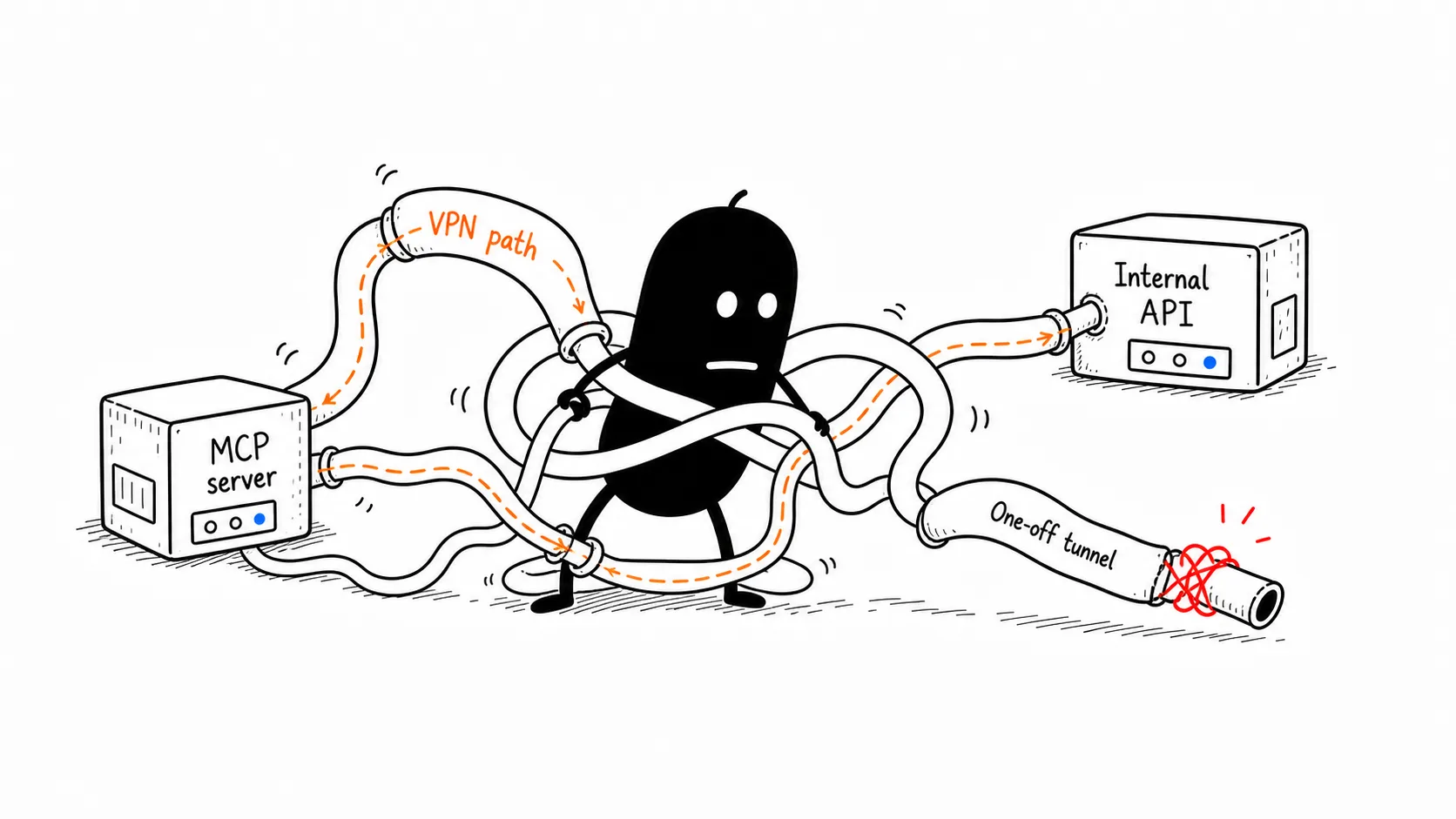
Why it mattersEvery custom route adds review and operational overhead.
Same Review Again
Security reviews repeat auth, policy, secrets, and log questions for every server.
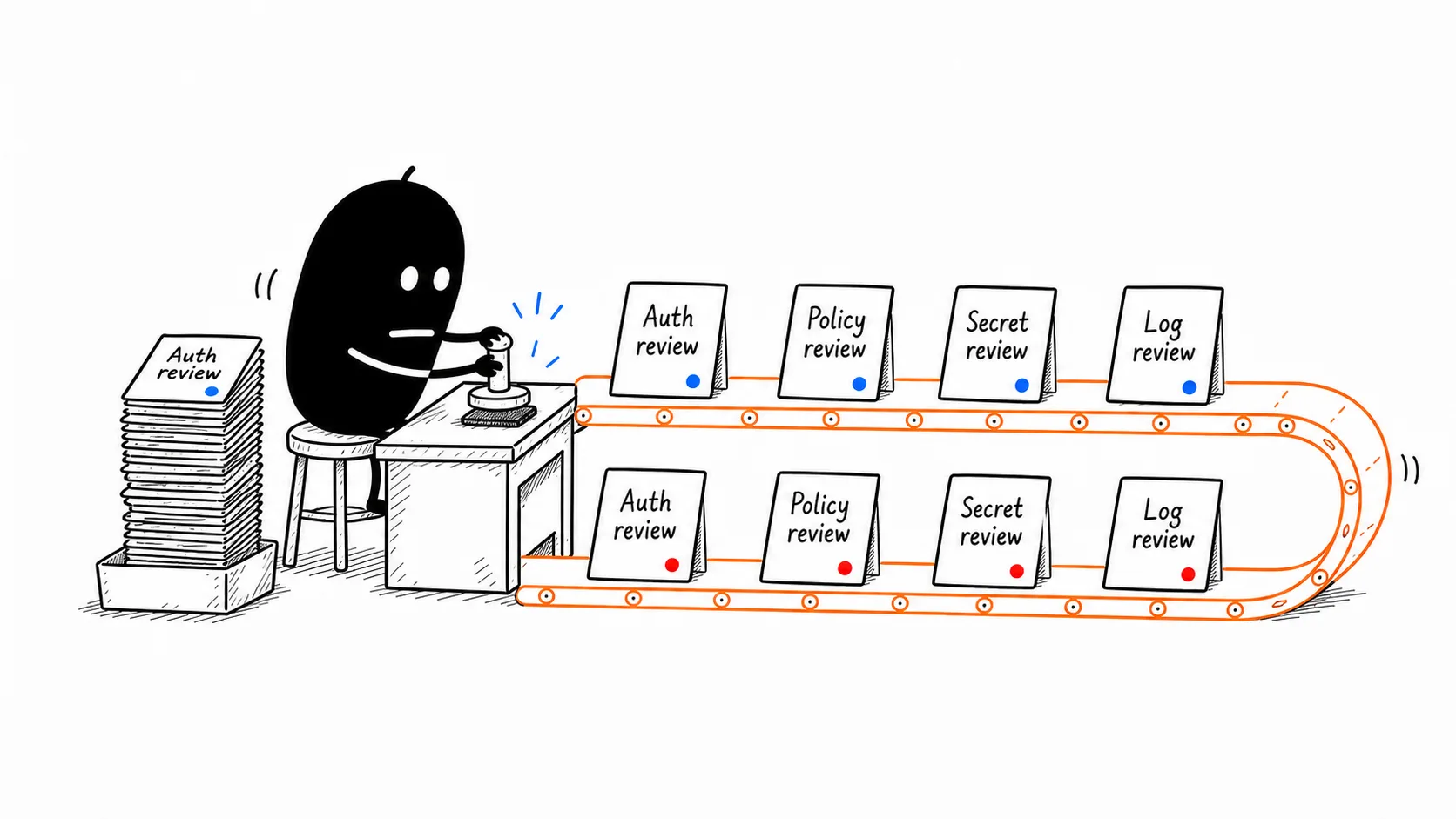
Why it mattersReview fatigue slows adoption and still leaves gaps.
Gateway Shared Plumbing
Shared identity, policy, credentials, sessions, and audit plumbing belongs in one governed path.
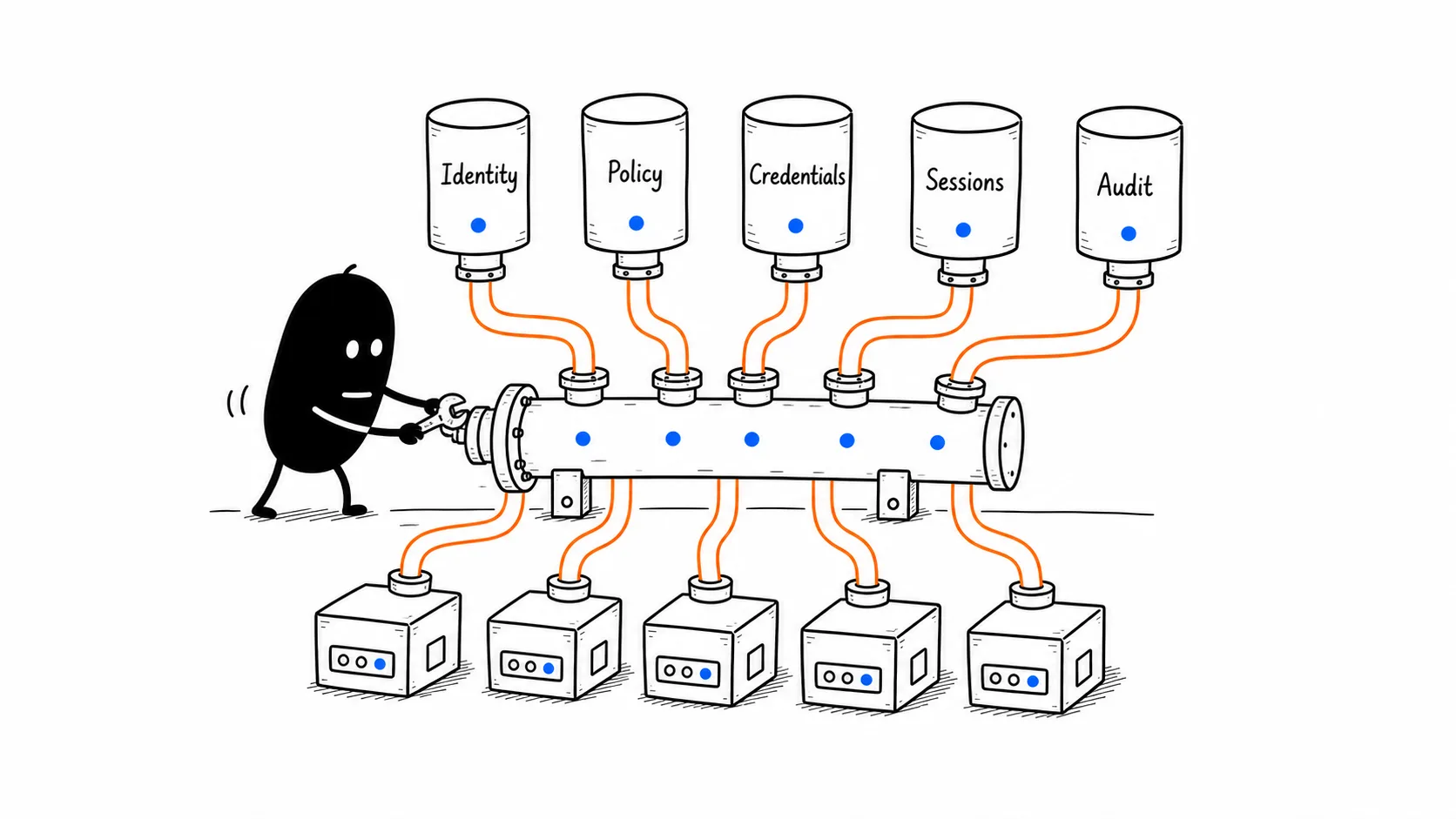
Why it mattersCentralizing control primitives makes them easier to test, improve, and explain.
Owners Keep Business Logic
Domain owners still own orders, claims, HR, and other tool semantics.
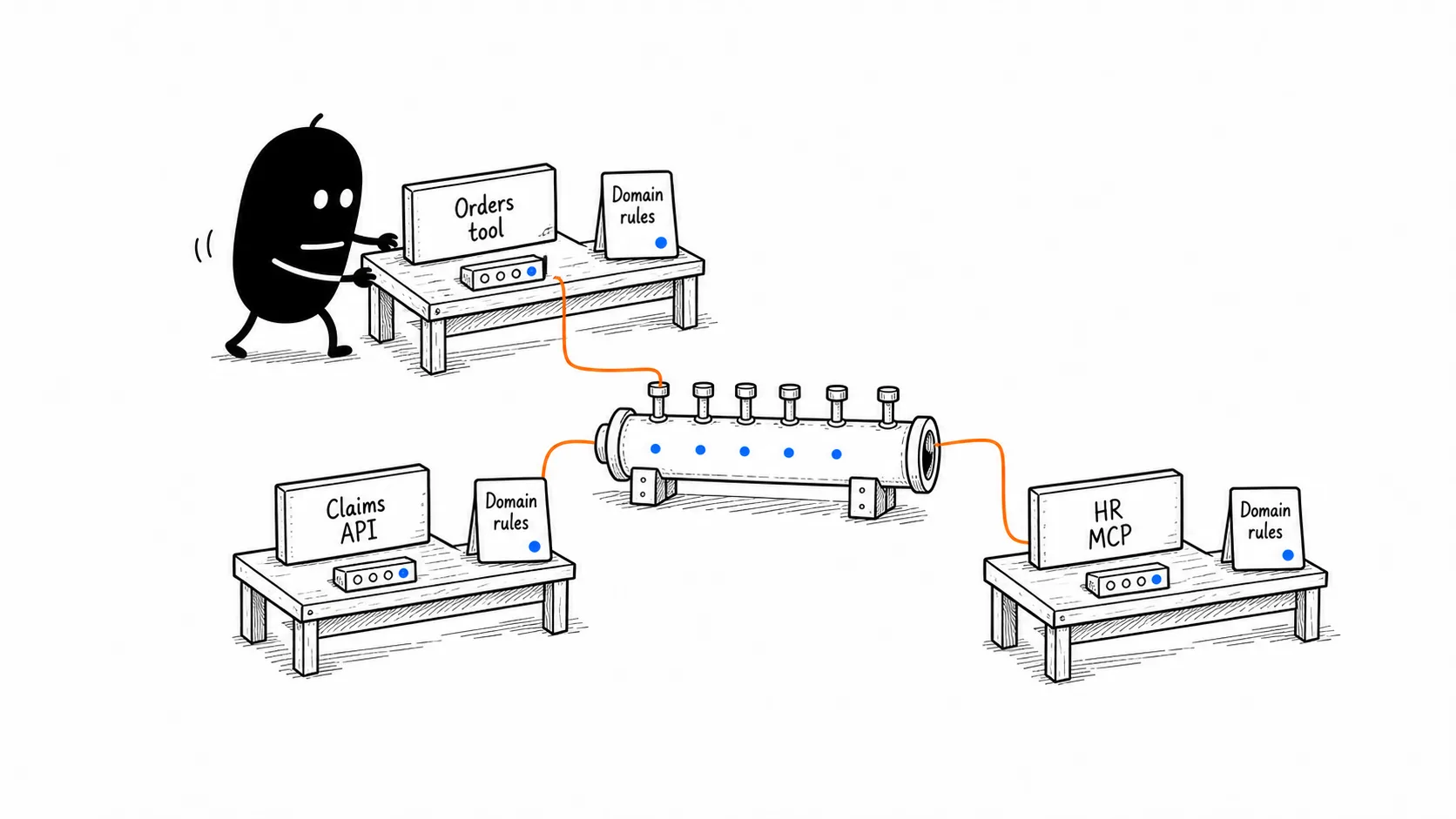
Why it mattersThe gateway should govern access, not flatten domain expertise.
Runtime Checks Each Call
Each call asks who acts, what they can see, what they can call, which credential is used, and how it is recorded.
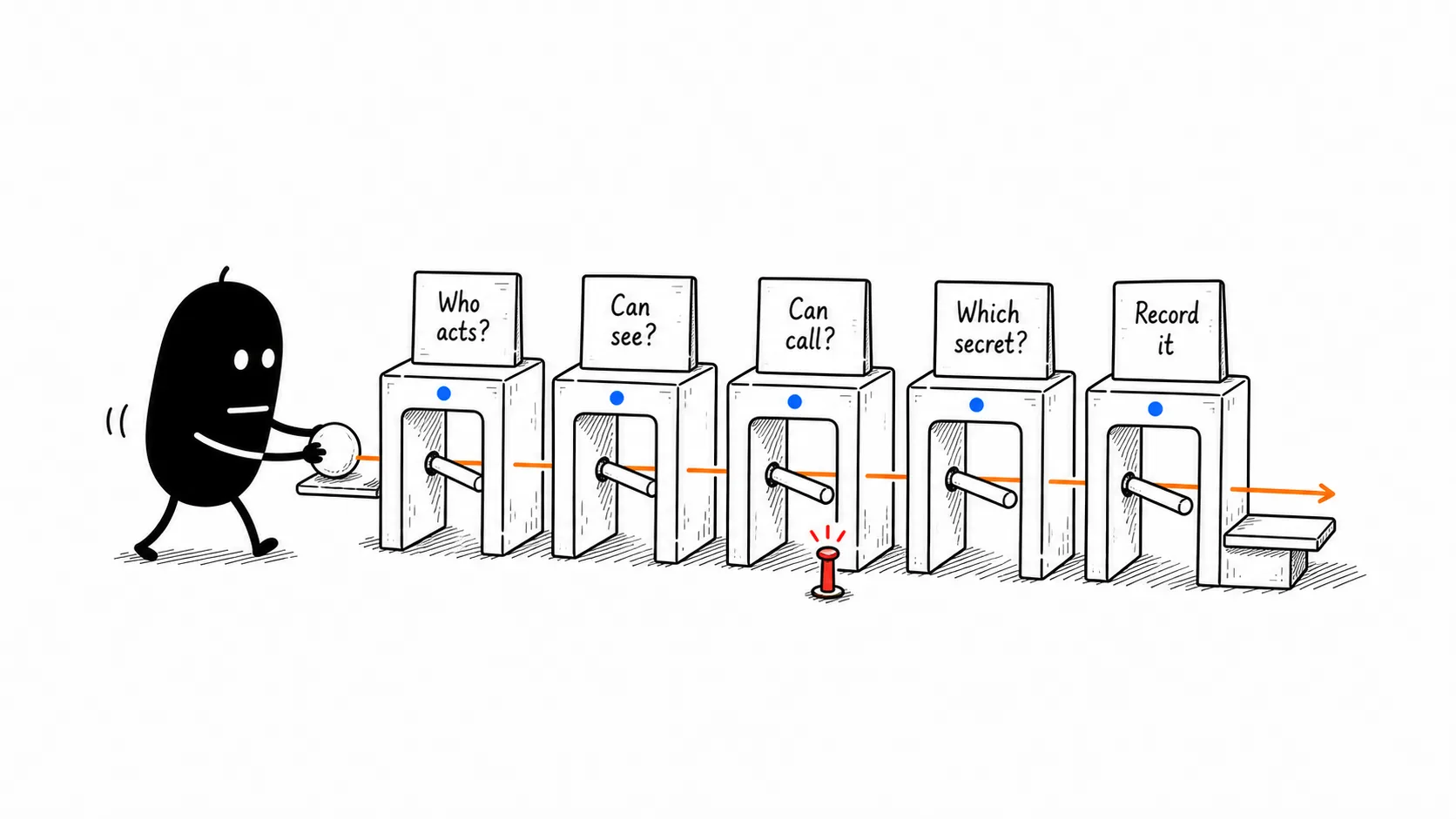
Why it mattersGovernance must execute at runtime, not only during registration.
One Governed Path
New MCP servers and selected APIs can both travel the same approved path.
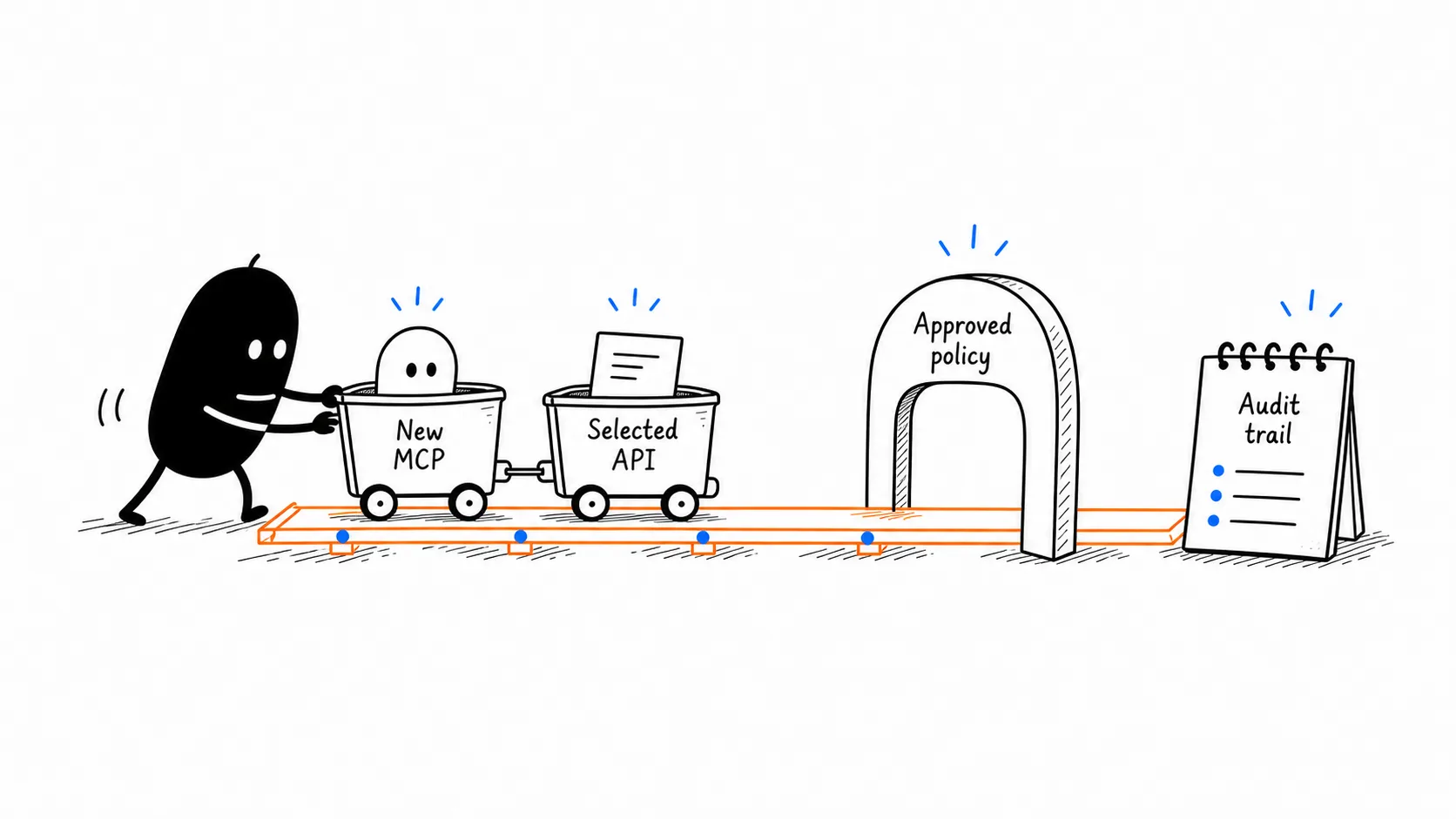
Why it mattersA shared gateway creates a repeatable path from pilot to production.
Shared controls
Prove the shared governance path together
We are looking for teams who are deciding whether to build MCP governance separately in every team or centralize the shared controls.
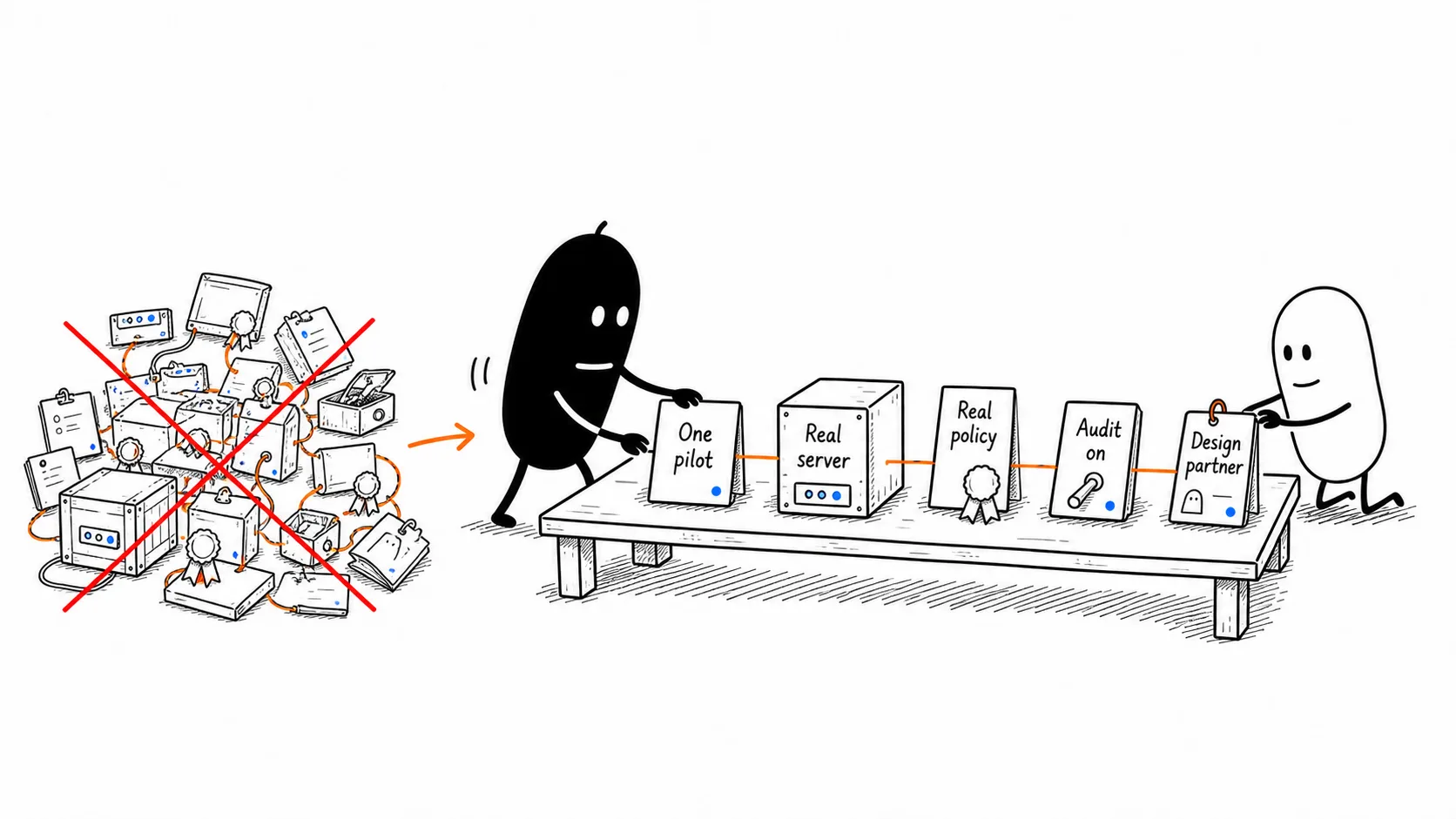
Start with one pilot: one real server, one real policy, one audit trail, and one team loop. Keep the domain logic with the owning team while we prove the shared governance path together.
The question is not whether teams should build useful MCP tools. The question is whether every team should also rebuild the same security plumbing.
Talk to our team